
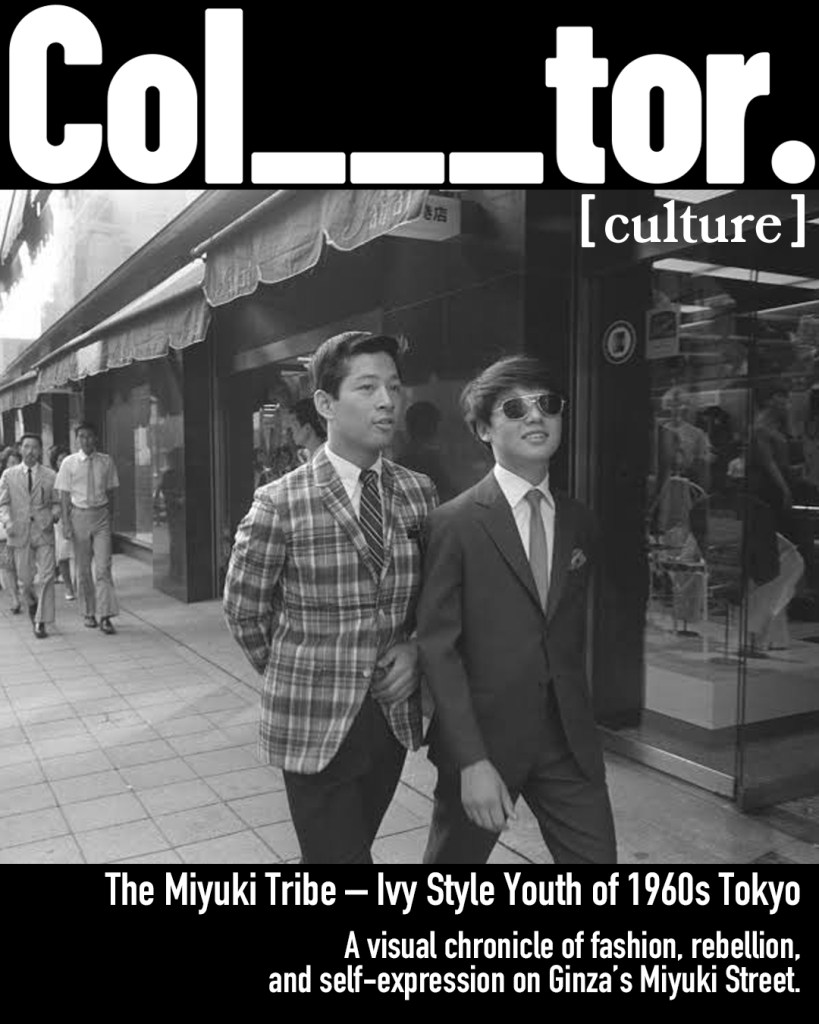
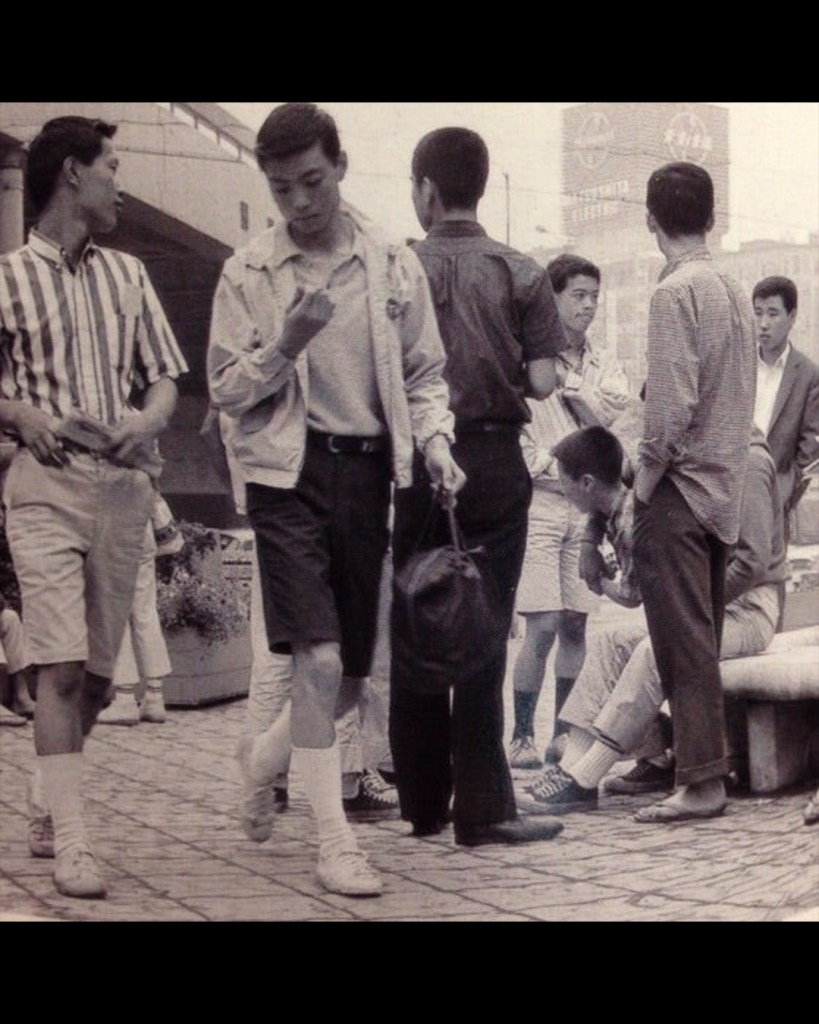
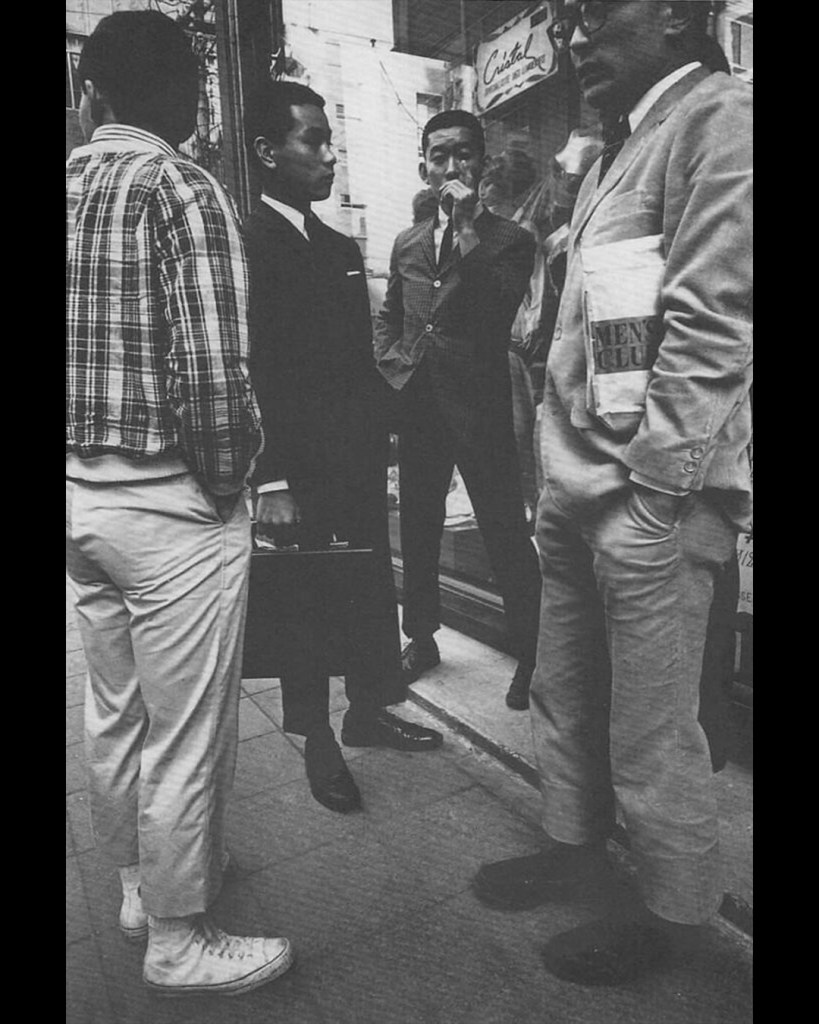
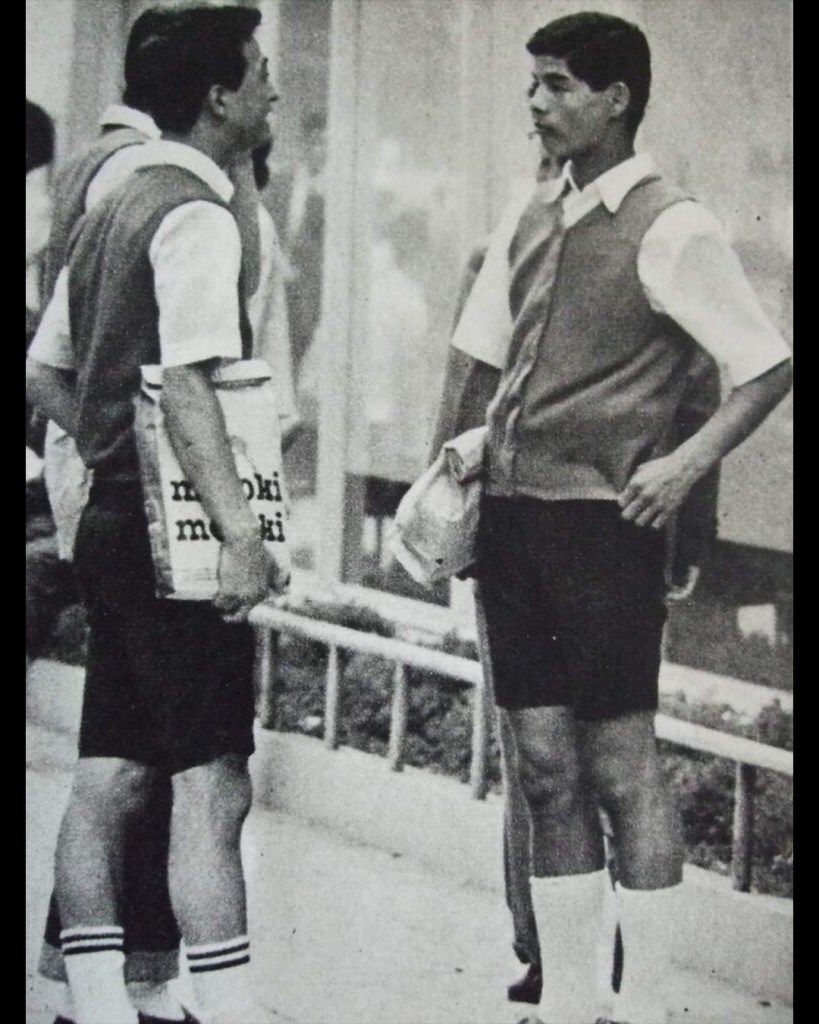
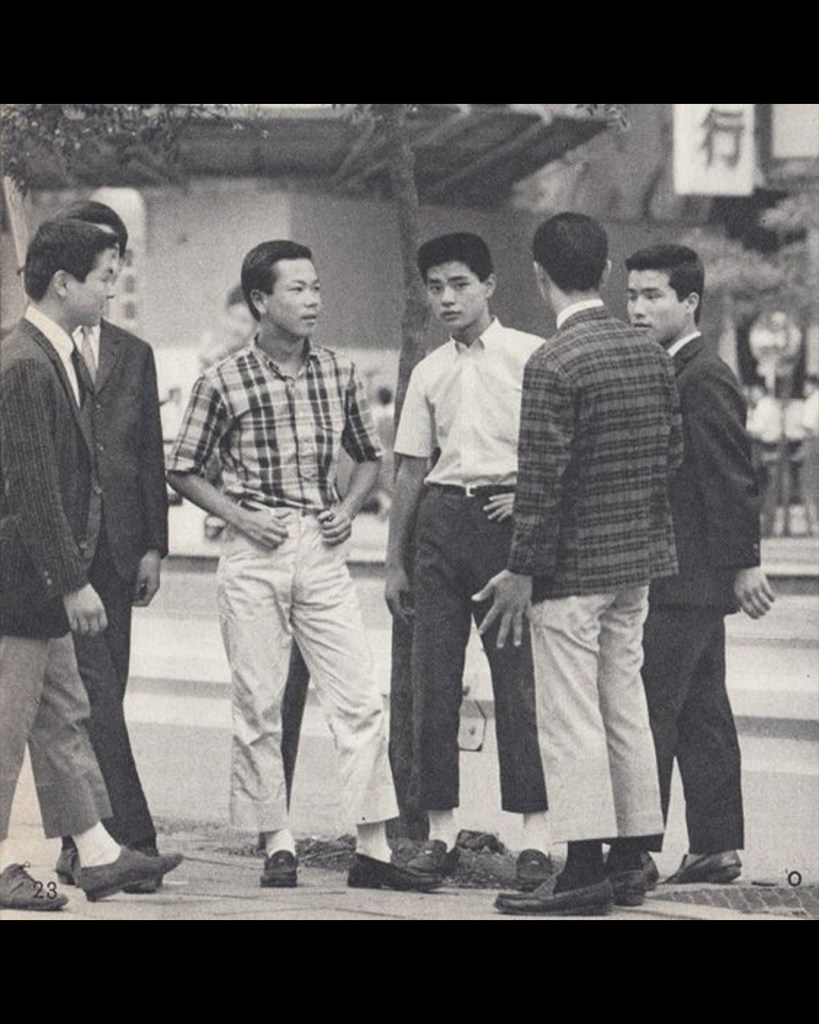
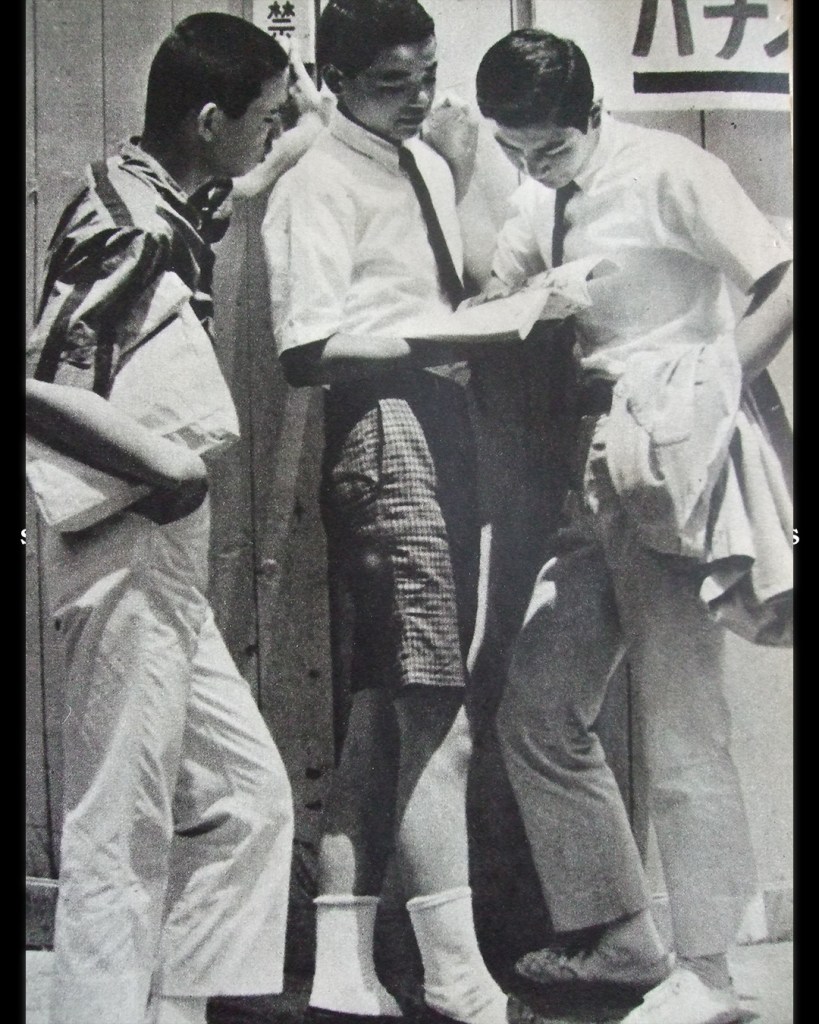

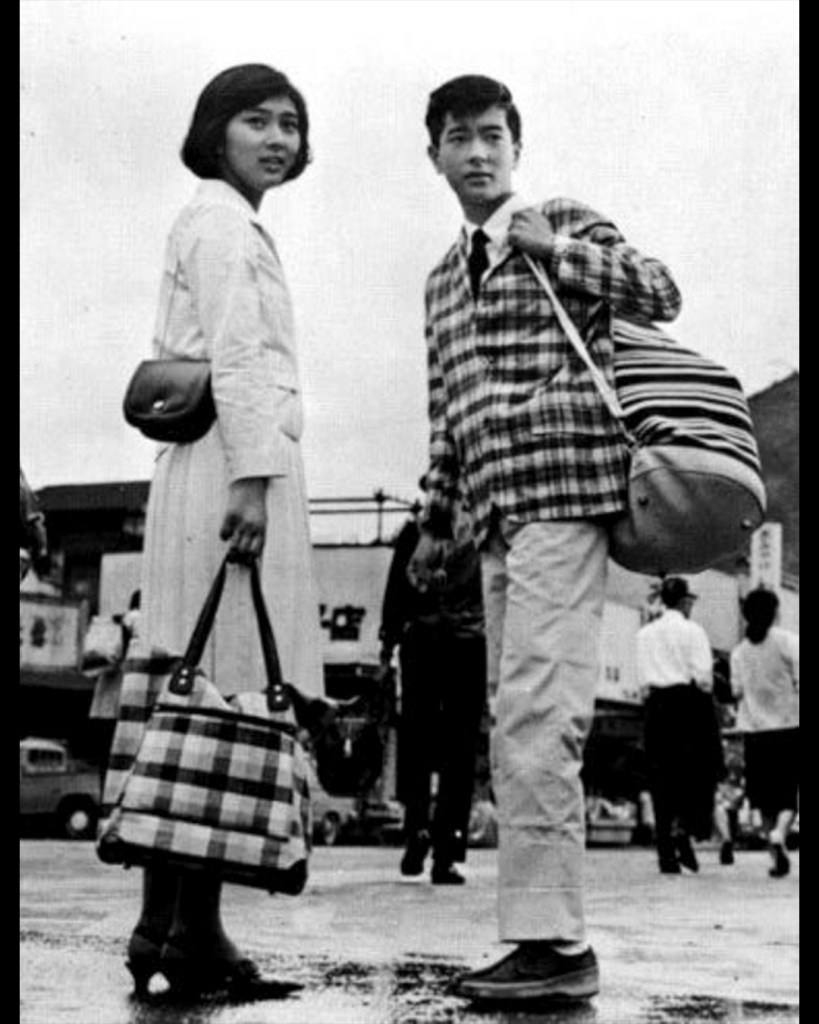
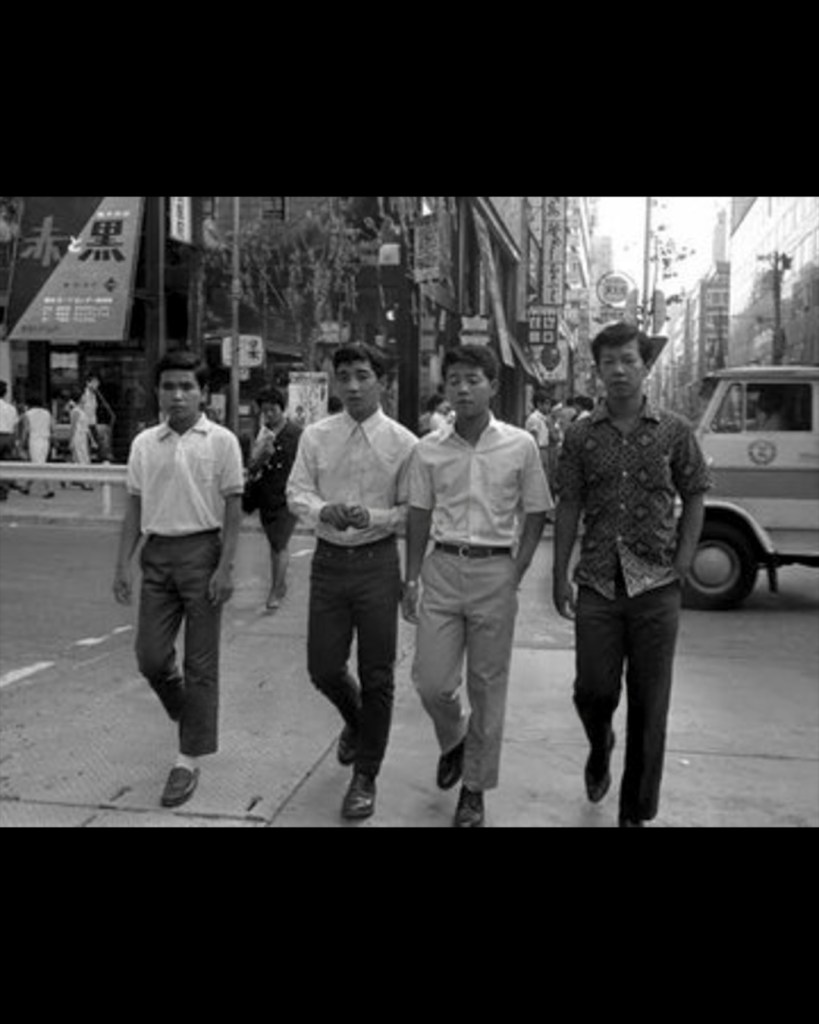
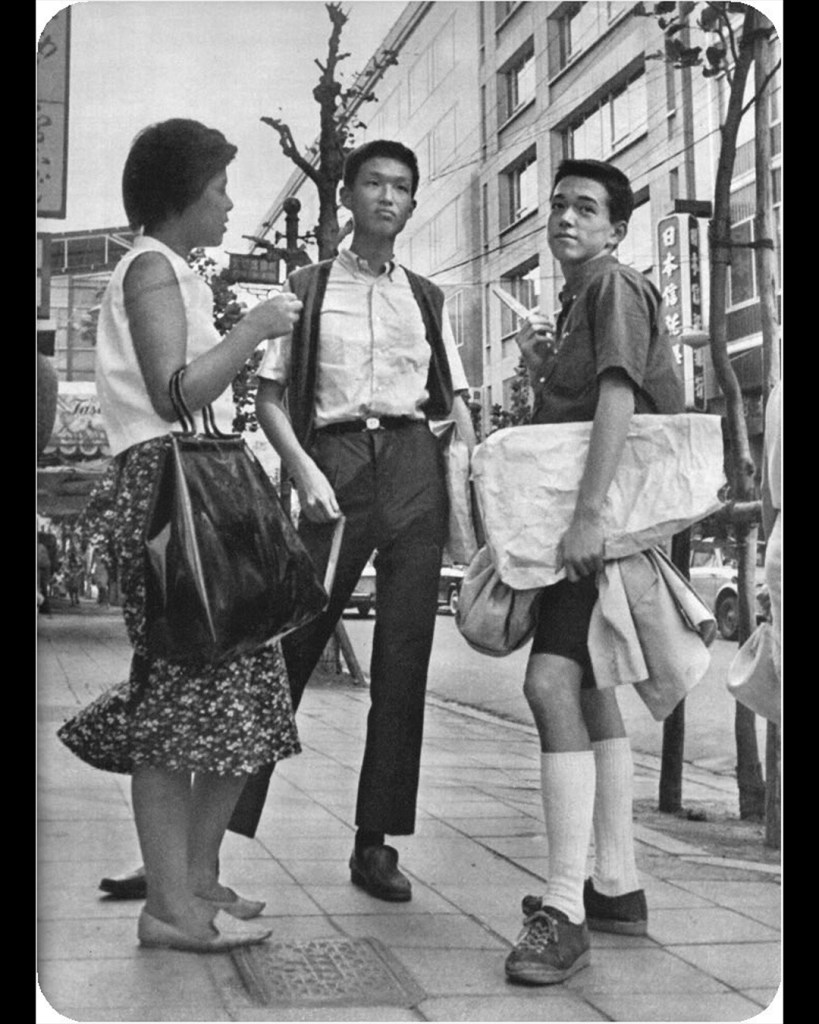
In the early 1960s, a distinctive youth culture emerged on Miyuki Street in Tokyo’s Ginza district. Known as the Miyuki Tribe, fashion-conscious young men and women gathered along the street wearing Ivy League–inspired clothing, transforming an ordinary urban space into a visible cultural phenomenon. Miyuki Street soon came to represent a new intersection of youth, fashion, and postwar identity.
Drawing inspiration from American Ivy League style, the Miyuki Tribe did not simply imitate Western fashion. Instead, they reinterpreted it through a Japanese sensibility, adapting preppy silhouettes to the realities of postwar Tokyo. Their appearance coincided with Japan’s rapid economic growth, a period when international culture and consumer goods became increasingly accessible to the younger generation.
The style of the Miyuki Tribe balanced casual ease with refinement. Men wore cropped cotton trousers or Bermuda shorts, Madras-check jackets, button-down shirts, loafers, or sneakers paired with white socks. Women favored blouses, long skirts, ribbon belts, and paper-bag–shaped huten bags produced by VAN, one of the era’s most influential fashion brands. Their clothing appeared effortless, yet was carefully considered.
Despite their polished appearance, the Miyuki Tribe was often met with suspicion. Media outlets portrayed them as idle and disruptive, accusing them of loitering in cafés, smoking in public spaces, and challenging social norms. Headlines framed the group as a threat to traditional values, reflecting broader anxieties surrounding youth culture and Western influence.
As preparations for the 1964 Tokyo Olympics intensified, government-led efforts to “clean up” urban spaces increased. Fashionable youth gatherings no longer aligned with the orderly image Japan wished to present to the world. By the late summer of 1964, the Miyuki Tribe gradually disappeared from Miyuki Street, their visible presence lasting less than a year.
Ironically, Ivy style reached its peak in Japan after the group itself had faded from public view. Fashion magazines, menswear brands such as VAN, and major department stores helped spread the aesthetic nationwide. What began as a localized youth expression quickly became a mainstream fashion movement.
The Miyuki Tribe was more than a fleeting trend. Through clothing and attitude, they asserted individuality in a society structured by conformity and hierarchy. Their brief appearance marked one of the earliest moments of modern Japanese street culture, leaving an influence that continues to resonate long after the streets themselves fell silent.
1960年代初頭、東京・銀座のみゆき通りでは、ひとつの特徴的な若者文化が生まれた。アイビーリーグ・スタイルに着想を得た装いで通りに集まった若者たちは「みゆき族」と呼ばれ、日常的な都市空間を可視化された文化現象へと変えていった。みゆき通りはやがて、戦後日本における若者、ファッション、アイデンティティが交差する象徴的な場所となった。
みゆき族は、アメリカのアイビースタイルを単に模倣したわけではない。彼らはプレッピーなシルエットを、戦後東京の現実の中で日本的感性として再解釈した。その登場は日本の高度経済成長期と重なり、若い世代が国際的な文化や消費財にアクセスしやすくなった時代背景と密接に結びついていた。
みゆき族のスタイルは、カジュアルさと洗練のバランスが取れていた。男性はクロップド丈のコットンパンツやバミューダショーツ、マドラスチェックのジャケット、ボタンダウンシャツにローファー、あるいは白いソックスにスニーカーを合わせた。女性はブラウスやロングスカート、リボンベルト、そして当時を代表するブランドのひとつであるVAN製の紙袋型ヒュッテンバッグを身につけていた。その装いは自然体でありながら、明確な意志を感じさせるものだった。
洗練された外見とは裏腹に、みゆき族は社会から疑いの目を向けられていた。メディアは彼らを、カフェをたむろし、路上で喫煙し、公共空間を乱す存在として描写した。見出しは彼らを伝統的価値観を脅かす存在として位置づけ、そこには若者文化や西洋的影響に対する社会的な不安が色濃く反映されていた。
1964年の東京オリンピックを前に都市整備が進む中で、こうした若者たちの存在は、日本が世界に示そうとした秩序ある国家像と次第に齟齬をきたすようになる。1964年の夏の終わり頃には、みゆき族は徐々に通りから姿を消し、その可視的な活動期間は1年にも満たなかった。
皮肉なことに、みゆき族が姿を消した後、アイビースタイルは日本全国で最盛期を迎える。ファッション誌やVANをはじめとするメンズウェアブランド、百貨店がこのスタイルを広く普及させた。街角から生まれた若者たちの表現は、やがて大衆的なファッションへと定着していった。
みゆき族は単なる一過性の流行ではなかった。彼らは服装と態度を通じて、同調と階層によって構成された社会の中で個を主張した。短い期間ではあったが、その存在は現代日本のストリートカルチャーの初期的な場面として記憶され、その影響はいまもなお残っている。
1960년대 초, 도쿄 긴자의 미유키 거리에서는 하나의 독특한 청년 문화가 형성되었다. ‘미유키족’이라 불린 이들은 아이비리그 스타일에서 영감을 받은 옷차림으로 거리에 모여들며, 평범한 도시 공간을 하나의 가시적인 문화 현상으로 바꾸어 놓았다. 미유키 거리는 곧 전후 일본에서 청년, 패션, 정체성이 교차하는 상징적인 장소가 되었다.
미유키족은 미국 아이비리그 스타일을 단순히 모방하지 않았다. 그들은 프레피한 실루엣을 전후 도쿄의 현실 속에서 일본적인 감각으로 재해석했다. 이러한 등장은 일본의 고도 경제성장기와 맞물려 있었으며, 이 시기는 젊은 세대가 국제 문화와 소비재에 보다 쉽게 접근할 수 있게 된 시기이기도 했다.
미유키족의 스타일은 캐주얼함과 세련됨이 균형을 이루고 있었다. 남성들은 크롭트 코튼 팬츠나 버뮤다 쇼츠, 마드라스 체크 재킷, 버튼다운 셔츠에 로퍼 또는 흰 양말을 신은 스니커즈를 착용했다. 여성들은 블라우스와 롱 스커트, 리본 벨트, 그리고 당시 가장 영향력 있던 브랜드 중 하나인 VAN에서 제작한 종이봉투 형태의 휴튼 백을 들었다. 그들의 옷차림은 자연스러워 보였지만, 분명한 의도를 지닌 선택이었다.
깔끔한 외모와는 달리, 미유키족은 사회로부터 곱지 않은 시선을 받았다. 언론은 그들을 무위도식하며 카페를 배회하고, 길거리에서 흡연하며 공공질서를 해친다고 묘사했다. 당시의 기사들은 이들을 전통적 가치관을 위협하는 존재로 규정했는데, 이는 청년 문화와 서구적 영향에 대한 사회 전반의 불안을 반영한 것이었다.
1964년 도쿄 올림픽을 앞두고 도시 정비가 본격화되면서, 이러한 젊은이들의 거리 점유는 일본이 세계에 보여주고자 했던 질서 정연한 국가 이미지와 어긋나기 시작했다. 결국 1964년 여름이 지나며 미유키족은 점차 거리에서 사라졌고, 그들의 가시적인 존재는 채 1년도 지속되지 않았다.
아이러니하게도, 미유키족이 사라진 이후 아이비 스타일은 일본 전역에서 전성기를 맞이했다. 패션 잡지와 VAN 같은 남성복 브랜드, 백화점들은 이 스타일을 적극적으로 확산시켰다. 거리에서 시작된 젊은이들의 표현은 곧 대중적 패션으로 자리 잡았다.
미유키족은 단순한 유행이 아니었다. 그들은 옷과 태도를 통해, 동조와 위계로 구성된 사회 속에서 개인성을 드러냈다. 짧은 순간이었지만, 이들의 등장은 현대 일본 스트리트 컬처의 초기 장면 중 하나로 남았고, 그 영향은 지금까지도 이어지고 있다.
Leave a Reply